The Assassination of King Canute IV
Listen to this case on Spotify

Jump to a section

The Church of St. Alban's in Odense, July 10th 1086
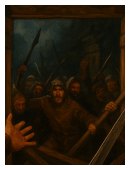
The men were still scattered along the walls and sheltering inside the chancel after rocks and spears had been hurled trough the light ports.
The smell of smoke was almost gone now, and the rain had eased.
The shouting outside the church was dying down.
The pounding against the door had stopped.
»Send him out.« a familiar voice called.
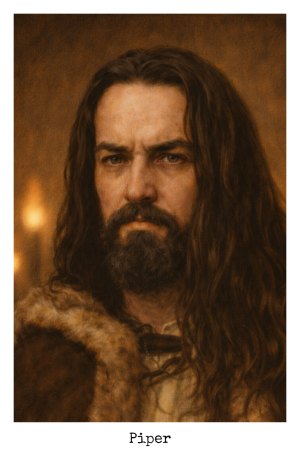
Benedict and Canute locked eyes. It was Piper. Only hours earlier they had dined with him inside the royal estate - and now he stood outside the church, speaking on behalf of the rebels.
»Or is there no courage left among the king’s men?« Piper shouted.
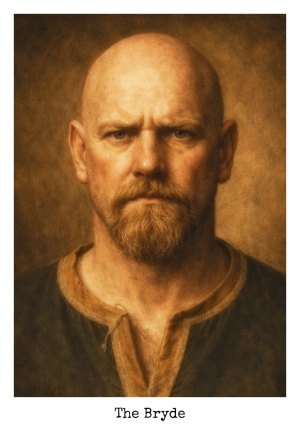
The bryde turned to Canute, his voice low and steady. »Open the door. And I’ll go and deal with that traitor.«
Canute and Benedict gave a brief nod. The others formed a loose flank on either side of the bryde. As he approached the door, the benches that had been used to bar it were pulled aside.

The bryde stepped outside into the semicircle of men gathered before the entrance. Piper stood at its center, waiting, one hand resting on his sword.
The bryde did not hesitate. As he advanced toward Piper, he drew his sword.
Blades met with a force that echoed through the street.
Then Piper’s blade cut across the bryde’s neck.
The bryde clutched the wound. Blood pulsed into his hand. He looked down at his palm - red, slick, unmistakable.
With rage in his eyes, in a swift motion he retaliated.
The blow came fast and close. Piper had no time to react.
For a moment both men remained standing.
Then Piper dropped to his knees.
Both men were losing consciousness quickly. Piper collapsed onto his side. The bryde, summoning the last of his strength, staggered toward the church door.
Huskarls who had watched from the porch rushed forward as he collapsed. The crowd was already stirring back to life, shaken from its brief paralysis by the sudden and unexpected gory end to the duel.
The mob, enraged at the sight of their spokesman being struck down by the king's own man, surged forward.
The men dragged the bryde inside while others hurriedly tried to secure the main entrance with benches.
For a moment it seemed they had succeeded. The pounding outside gradually faded.
But suddenly they heard hacking at the wooden doorway to the chancel behind them.
The frame began to shudder as the huskarls still able to fight steadied themselves for what they knew would be their final stand.
With the door gone, there would be no holding back the overwhelming crowd.
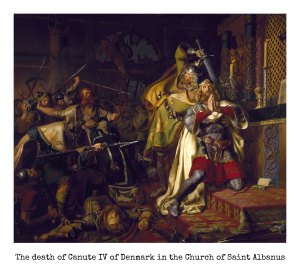
With a tremendous crash, the doors burst inward, striking the altar and sending everything upon it flying.
The crowd poured in.
And the rest is history.

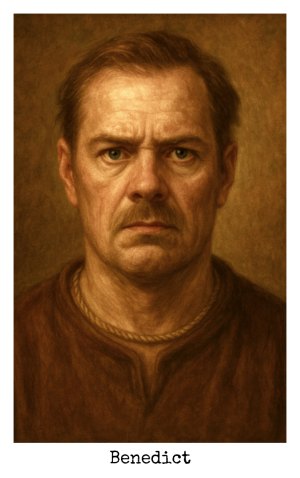
Shortly thereafter the King of Denmark, Canute IV, his brother Benedict, and most of their guard would be overrun and slaughtered inside that church.[1]
Which begs the question: Why?
What could possibly have made a group of men so furious that they decided to chase the King over 311mi (500km) within a short period, on horseback, with the intention of murdering him?
In order to understand why these events transpired in Odense, there are two factors we need to understand. First: who Canute was, and what legacy he believed himself heir to. And second: how power was structured in Denmark at the time - including the old conscription/levy/tax system called Lething or Leidang.[2]
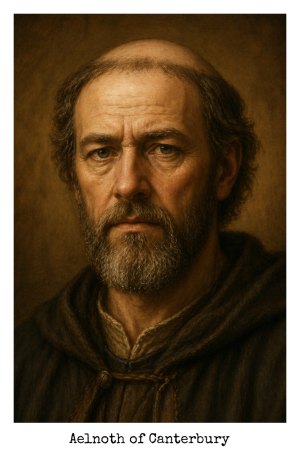
A Monk Named Ælnoth of Canterbury
The most reliable account of these events was written about 35 years after they took place[3][4]. His name was Ælnoth and he was from Canterbury in England.
According to Ælnoth himself, he had already lived in Denmark for nearly 24 years by the time he wrote the chronicle - meaning he was likely present in the kingdom during Canute’s reign and the political turmoil surrounding his death.[5]
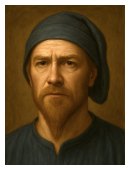
It is important to note that Ælnoth is by no means an impartial observer nor can he afford to be. Ælnoth was a Catholic monk, Canute was now a saint, and the King at the time of Ælnoth's writings was no one other than Canute's younger brother Niels. So he deliberately writes history as theology, shaping contemporary events through biblical typology and hagiographic convention required at the time.
So he frames Canute as the King David, and Piper becomes Judas Iscariot, that sort of thing. So let's keep that in mind before we move on.
Heir to a Lost Empire
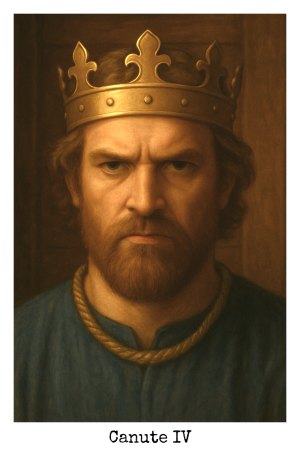
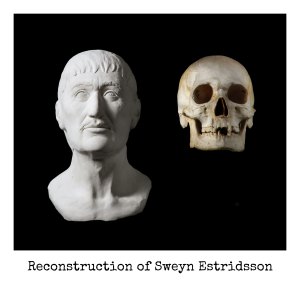
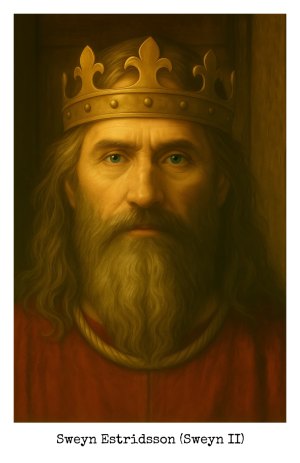
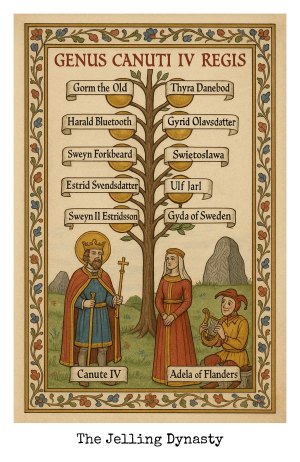
To understand what happened next, we need to understand who Canute IV was, and what kind of royal legacy shaped his mindset. Canute was the son of King Sweyn II, also known as Sweyn Estridsson.

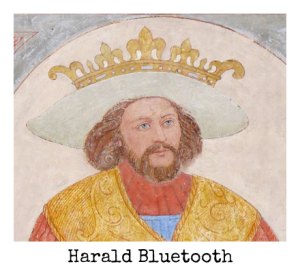
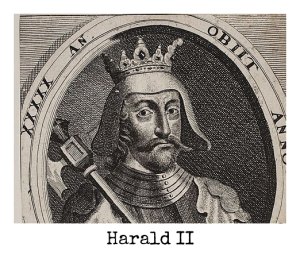
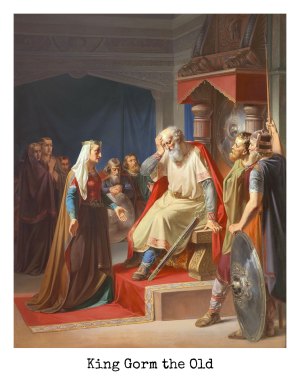
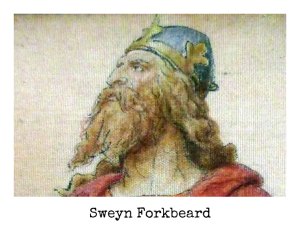
He was part of The Jelling Dynasty, a descendant of Gorm the Old, Harold Bluetooth, Sweyn Forkbeard who was proclaimed King of England in 1013 after nearly a decade of asserting his dominance from within the kingdom by seizing towns, enforcing tribute, exploiting political fractures, and steadily positioning himself as the true power of the realm through calculated displays of terror against his opponents.
In fact it is not unrealistic that Swansea in England could be named after him, meaning “Sweyn’s island.”[6]
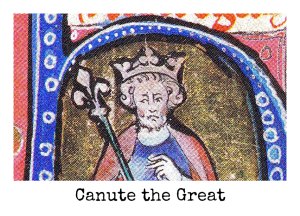
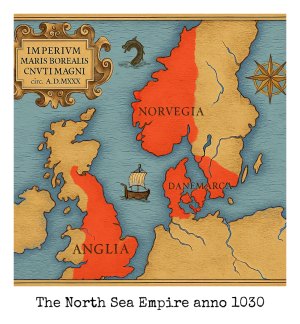
But he did pave the way for his son whom Canute IV is often confused with. Canute the Great, who in time became King of the North Sea Empire (England in 1016, Denmark in 1018, and Norway in 1028), which he ruled until his death in 1035.
For much of that time, even English sources remembered his rule as unusually successful.

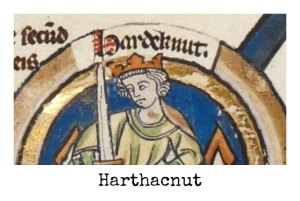
Unfortunately both of Canute the Great's sons Harold Harefoot and Harthacnut died without heirs, ending the Danish royal line on the English throne.

But it did mean that Canute IV's father Sweyn II (born 1019) had at least for part of his childhood experienced Anglo-Saxon influence firsthand, and may even have stayed in England during his youth.
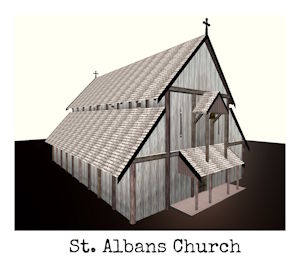
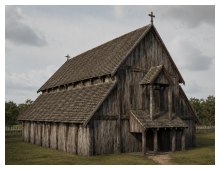
In fact, the murder scene - St. Alban’s Church - was almost certainly built during Canute's father’s reign, and the Anglo-Saxon influence is clear.[7] The church was dedicated to St. Alban of Verulamium, who at that point was not particularly known in Denmark, but had an enormously popular cult in contemporary Winchester, where the Danish kings had once ruled, and in Canterbury, the seat of the English archbishop whose clergy shaped the early Danish ecclesiastical organization.
So keep in mind: we are dealing with a man raised on stories of the glory days of the lost Anglo-Danish kingdom - and based on his later actions, there is little doubt he intended to go down in history as the Danish king who would reclaim the English throne and reunite what was once lost.
Apart from that, Canute was married to Adela, who was part of the Baldwin family. More commonly known as The House of Flanders. Specifically, she was the daughter of Count Robert I of Flanders.
King and Magnates
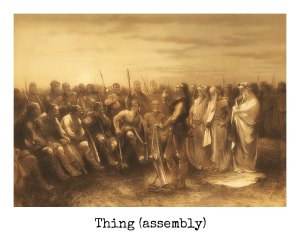
The second component that caused the events that transpired here is the Danish power structure at the time. Unlike the English system, Danish kingship was not yet strictly hereditary in this period. Historians often describe the system as a kind of aristocratic democracy - meaning that the noble elite held assemblies called the Thing, where they met in council and formally elected the new king.

So when Sweyn II died, even though Canute was not the oldest brother, he could still have been elected king if the leading magnates had considered him the stronger candidate.
But Canute already appears to have had a reputation for ambition and strong royal authority. And his outspoken desire to reconquer England may have alarmed parts of the Danish elite, who likely saw such campaigns as costly, risky, and potentially disruptive to their own interests.
Instead, the magnates elected his older and far milder brother, Harald Hen.
This setback did not stop him for long. Harold died of natural causes 4 years later, and with no strong rival claimants, Canute was now the obvious choice for the next election.
Three years after becoming king he began serious preparations for a new attempt to invade England. And this is where the second piece of the Danish power structure - the Leidang system - became the beginning of his downfall.
The Leidang System
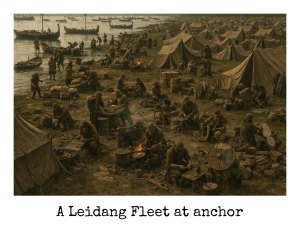
Was a conscription and navy levy framework of the Danish kingdom. Its purpose was to ensure a continuous and combat-ready naval force for the Kingdom of Denmark: a fleet spread across the realm and maintained locally. It was the responsibility of the regional magnates to organize and supply this navy with everything required - men, livestock, timber, iron, rope, sails, provisions, and so on.

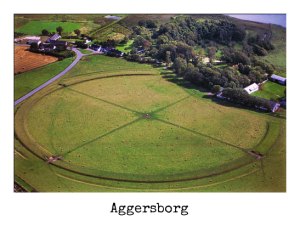
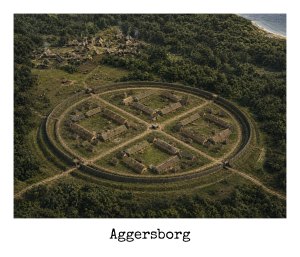
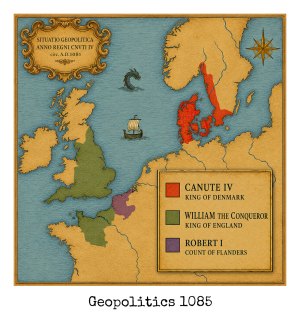
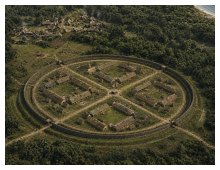
The navy itself was under the authority of the king. And in 1085, hoping to exploit the unrest in England after the Norman Conquest, Canute ordered the full Leidang fleet (from Jutland, Funen, Zealand, and Scania) to gather in the Limfjord - possibly near Aggersborg - in preparation for the reconquest.
We are talking about a massive fleet. Although the exact number is unknown, we can make educated estimates based on the organization of the Leidang: likely 200–300 longships, manned by somewhere between 10-15,000 men.
The fleet was in fact so big that when William the Conqueror got wind of it, he began fortifying the city walls along the English coasts, and started putting together a mercenary army prepared for the attack.

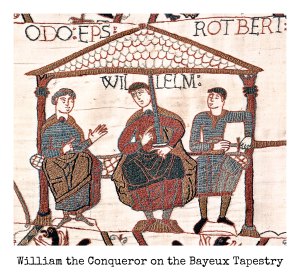
Now you may ask yourself how did William the Conqueror get intel of what was going on in Denmark at the time. Didn't he have enough to deal with after the English conquest to have spies all over continental Europe? And it would be a fair question. Until you realize that William's late wife Matilda, was sister to Canute's Father-in-Law, Robert I of Flanders.

Fortunately for William, this is where the story starts going downhill for Canute.
It is also where Ælnoth’s account becomes difficult to follow.
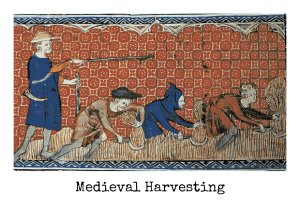
Because what happens next is that the magnates in charge of the Leidang fleet choose Canute’s younger brother Olaf - who happens to be among them - to act as their envoy. He is sent to ask the king for permission to dissolve the fleet so the men can return home and save the remaining harvest.
According to Ælnoth, Canute grants them leave, and everything appears settled.
But then Ælnoth goes on and calls Olaf’s mission a failure.

Canute sends him into what can only be described as “protective custody” at his father-in-law’s court in Flanders, while royal officials begin altering the way they administer the realm - manipulating prices and using scales that favor the king.
If Ælnoth’s version were complete, Canute could simply have intervened and punished those officials to restore order.
But he didn’t.
The Missing Piece
Ælnoth never explains why.
Remember this is written about 35 years after the events. There would have been living witnesses. Yet he says nothing about what actually triggered the rebellion.
That silence matters.
Like many uprisings, this one may have been about overreach - a shift in the balance between king and elite.

One possible factor is the introduction of a tax referred to as næsegæld (lit. “nose tax”)[2]. We do not know exactly what it was, but if it represented a new or more direct form of extraction, it could have challenged the existing order.
If so, the sequence begins to make sense: tension around the Leidang fleet, negotiations breaking down, and a growing conflict over obligations and payment.
And once royal officials began enforcing such demands locally, the situation could escalate rapidly - which would also explain why the violence was directed so clearly at the king’s own administrators.
So why would Ælnoth leave something like that out?
One possibility is that the church itself stood to benefit from such a system, and that raising the issue would draw attention to the clergy’s role in the conflict.
But this is all speculation.
The fact is: because Ælnoth leaves out that crucial piece of the story we will never know for certain what triggered the rebellion.
But what ensued was brutal.
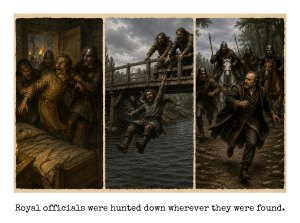
Rebel forces descended on the king’s administrative centers. The chronicle describes what happened next.
The Latin Source TextQuidam namque nudi stratis extrahuntur, pro foribus suffocantur; Nonnulli flumine præcipitantur; Sed et ipsos magnates undicumque inuestigantes persequuntur...
And the whole situation created what could only be described as a royal blackout in parts of Jutland.

The Uprising
Canute, fully aware of the unrest, needed to project control.
He needed to assert his authority.
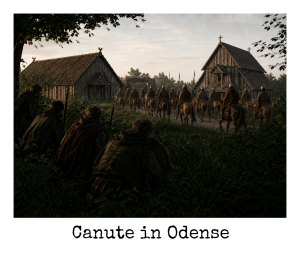
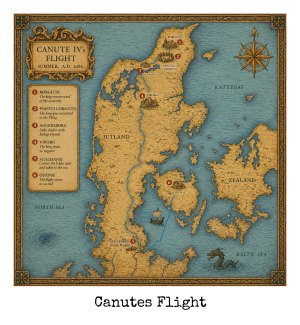
So he chose to go north - to the royal estate at Børglum - and conduct his business as usual.
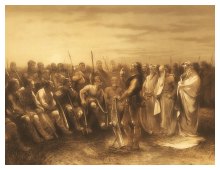
While there, he received word that the local magnates had gathered for a Thing.
He decided to go there uninvited - to a place by Ælnoth called Pontus Cornicus.
When they arrived the air was thick with animosity, and the hostility was being voiced openly.
Realizing how far things had gone, he withdrew with his men to assess the situation.
Realizing that he had lost control of the region, he chose to leave - not in panic, but deliberately - to protect himself and his entourage.
He pulled out of the north and moved toward Aggersborg, taking shelter nearby at a Bishop named Henrik's estate.

But not long after, word reached them: armed bands from the assembly were already on the move.
Some followed on foot, others on horseback - tracking the king’s movements.
Hearing that they were closing in, Bishop Henrik set out with a small group of trusted men to meet them.
He tried to reason with them - urging restraint, laying out right and wrong, warning them of the consequences.
They did not listen.
Shouting him down and threatening his group, they pressed forward - brushing past Henrik and leaving him behind as they continued their pursuit of the king.
The Flight
By then, Canute was already moving south.

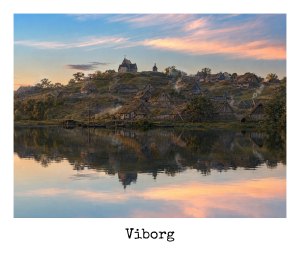
He made his way to Viborg - the political and judicial center of Jutland.
If there was anywhere his authority should still hold, it was here.
But it didn’t.
The support he had hoped for - was gone.
Worse still, the situation had already turned against him. The place was no longer safe.
So he kept moving.
Pushed out of Jutland entirely, he reached present-day Schleswig in Germany, and took to the sea with what remained of his men - sailing down the River Schlei, heading for Funen.

There, in Odense, the flight would come to an end.
The Last Night
That evening, before the storm broke, there was still a sense of order.
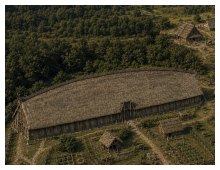
Inside the royal estate in Odense, the king and his men gathered for a final meal.
Canute sat at the table with his closest companions - his brother Benedict among them - and not far from him, his younger brother Erik, who would later become king himself.
They had come here to wait. To rest. To decide what to do next.
Outside, the city was restless.

But inside, for a brief moment, there was something resembling calm. Food was served. Cups were filled. Voices and laughter carried through the hall. And among those seated close to the king was a local man named Piper.
He had eaten at the king’s table. Drunk from his cup. Accepted his gifts.
Close by sat the bryde - a senior household officer, one of the few men who could speak on the king’s behalf. The man you went through if you wanted access to the king himself.
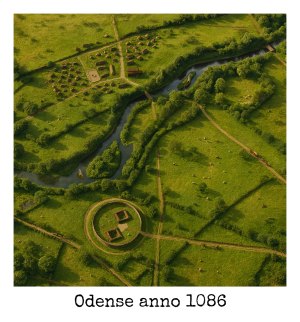
Behind the estate, only 98yd (90m) away, stood the church of St. Alban. A wooden structure with narrow openings. Built for worship.
At this point, there was still time.
No doors had been broken.
No blood had been spilled.
Only the quiet tension of something approaching. And the men conspiring against the king were already gathering near the town.
Some watching.
Some waiting.
And one of them was already inside dining with the king.
When the time came for mass, the gathering broke apart. Piper left. Some of the king’s men remained at the royal estate.
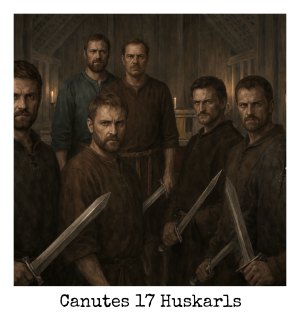
But Canute - along with his brother Benedict and the core of his huskarls - made their way to the church.
What happened next unfolded quickly.
The crowd that had been restless throughout the day began to close in.
The estate was overrun.
And before long, the church itself was surrounded.
The attackers even tried to set fire to the church - a sign of just how unhinged the situation had escalated.
But according to Ælnoth, the summer rain put an end to that attempt.
Stones and spears were hurled through the openings of the building.
The doors were forced.
Inside, in the chancel, the king and his men made their final stand.

Back to St. Alban’s
And so we return to the moment where we began.
By the door of the church. The crowd forming a circle outside.
Piper - a man who had dined with them only hours earlier - now calling for the bryde.
What happened there was not sudden.
It was the culmination of weeks of growing unrest.
The assembly against the king.
The silence and traps at Viborg.
The chase south through Jutland.
By the time they reached Odense, the king no longer had a kingdom behind him.
Only the men still standing at his side.
And when the door finally gave way, it wasn’t just a mob breaking into a church.
It was two systems colliding.

A king shaped by an Anglo-Danish royal tradition, where authority was increasingly tied to blood, dynasty, Christian Kingship and ultimately the will of God.[8]
And a Danish tradition where the elite elected their king.
They did not see him as an extension of divine authority.
He was chosen, by them.
And if necessary - he could be unchosen.
In their eyes what happened in Odense was not the breakdown of order. It was the restoration of it.
The rest was inevitable.
The Aftermath
So what happened after these events?
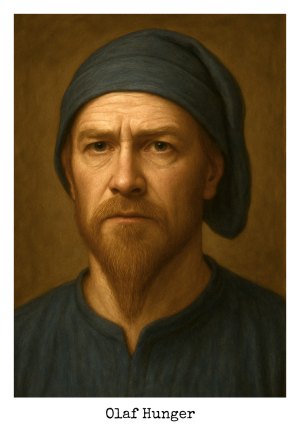
Canute’s younger brother Olaf who had acted as intermediary between the king and the dissatisfied elites behind the fleet - now became the new king.
And he must have been elected by many of the same men who had just hunted Canute across the kingdom and watched him die in Odense.
Olaf had to pick up the pieces of a country that had collapsed systemically. Royal authority had cracked. The old balance between king and magnates had reasserted itself violently.
Then came famine.
The first years of his reign were dominated by one of the worst famines in medieval Danish history. To later generations, that suffering looked like judgment - a sign that God had not forgotten what had happened in St. Alban’s Church.

But the reality may have been far more mundane.
The mobilization of the enormous Leidang fleet, followed by rebellion, political collapse, and widespread unrest, may simply have disrupted the harvest cycle itself. Grain that would normally have been preserved for sowing may instead have been consumed in desperation.
And because Olaf had risen to the throne so quickly after his brother’s murder, suspicion followed him into history.
He would never be remembered simply as Olaf I of Denmark.
Instead history remembers him forever as:
Olaf Hunger!
Like Father, Like Son
Canute's wife Adela fled with her son to Flanders, leaving her daughters behind in Denmark.[9]
She would later marry Roger Borsa and move to his duchy Apulia and Calabria in present-day Italy.

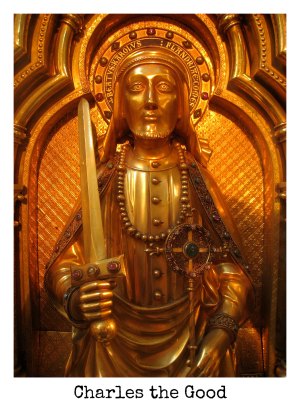
Tragically, Adela and Canute IV's son Charles would go on to die under circumstances eerily similar to those of his father.
In 1127, Charles was murdered inside St. Donatian's Cathedral in Bruges by armed men acting on behalf of the Erembald clan.[10]
Like his father before him, Charles would later be remembered as a martyred ruler killed inside a church during a political conflict.
From King to Saint
Back in Denmark, after just 9 tumultuous years on the Danish throne, Olaf died.
And Erik - who had escaped the massacre in Odense nine years earlier - was now elected king.
Unlike Olaf, Erik had witnessed the events firsthand and embraced the memory of his murdered brother.
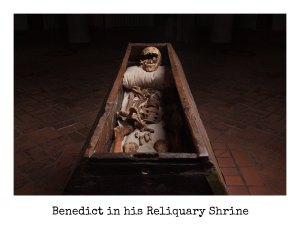
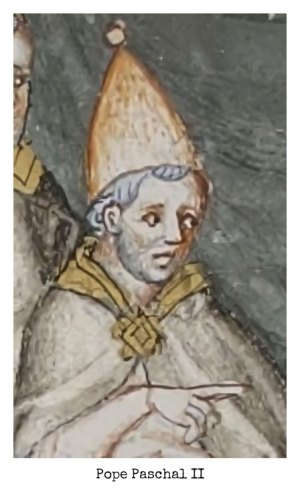
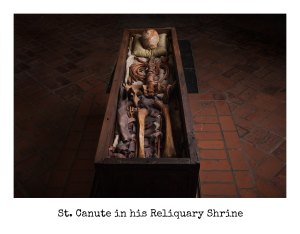
During his reign, efforts to canonize Canute intensified, and on April 19th 1101 Canute was formally recognized as a saint by Pope Paschal II and the Church of Rome.[11]

The murdered king Canute IV had now become Canute the Holy.
The Verdict
In the case of Canute IV we unfortunately will never know who those noblemen were. So the case remains unsolved.
And yet, in the end, the men who killed Canute may have achieved the opposite of what they intended.
They ended up strengthening the power of the Catholic Church, which in time became the single largest landowner in medieval Denmark.[12][13]
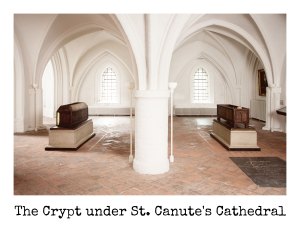
Had the king not been murdered inside St. Alban’s Church, it is unlikely that the cult surrounding him would ever have emerged with the same force. The pilgrims, clergy, relics, churches, monasteries, and royal attention that followed in the wake of his canonization transformed Odense permanently.[14]
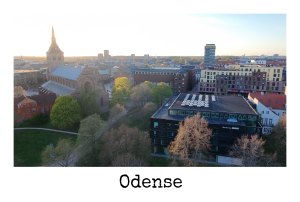
The city that exists today was, in many ways, shaped by the aftermath of that murder.[15]

A king who lost his kingdom in death would ultimately help give rise to one of medieval Denmark’s most important religious centers.
Sources
- Tabula Othiniensis (ca.1095)Transcript of a long lost copper plate that was put alongside Canute IV in his sarcophagus when his body was moved in 1095
- Leding, Næsegæld og Kongemagt, Niels Lund (1997)Key analysis of the Leidang
- Vita et passio sancti Canuti, Ælnoth of Canterbury (1100)
- Vitae Sanctorvm Danorvm, Martin Clarencius Gertz (1912)Main narrative source for Knud IV, martyrdom and rebellion in Odense
- Gesta Swenomagni Regis et Filiorum eius et Passio gloriosissimi Canuti Regis et Martyris, Ælnoth of Canterbury (2026)
- Viking Swansea, Claire Holmes and Keith Lilley
- St. Albani Kirke – Arkæologisk rapport, Jakob Tue Christensen & Mikael Manøe Bjerregaard (2018)Archaeological dating & structure
- The Lund Gift Charter, Royal Chancery of King Canute IV (1085)
- Adela of Flanders - WikiPedia
- A Murder, a Siege, and Too Many Successors: How Flanders descended into Civil War in 1127, Peter Konieczny
- Canute IV - WikiPedia
- Hvem ejede jorden i middelalderens Østsjælland?, Erik Ulsig (2009)
- Odense Domkirke (Sankt Knuds Kirke), Claus Rohden Melin, Peter Kühn-Nielsen, Ulla Kjær og Poul Grinder-Hansen (2025)The history of the development of St. Canute's Cathedral.
- Life and cult of Cnut the Holy, Steffen Hope, Mikael Manøe Bjerregaard, Anne Hedeager Krag & Mads Runge (2017)
- When God came to Town – Urban Development and Religious Practices in Early Medieval Odense, Denmark, Kirstine Haase & Mikael Manøe Bjerregaard (2022)



 :
:
 :
:
 :
:
 :
:
 :
:
 :
:
 :
:
 :
:



 :
:
 :
:
 :
:
 :
:
 :
: